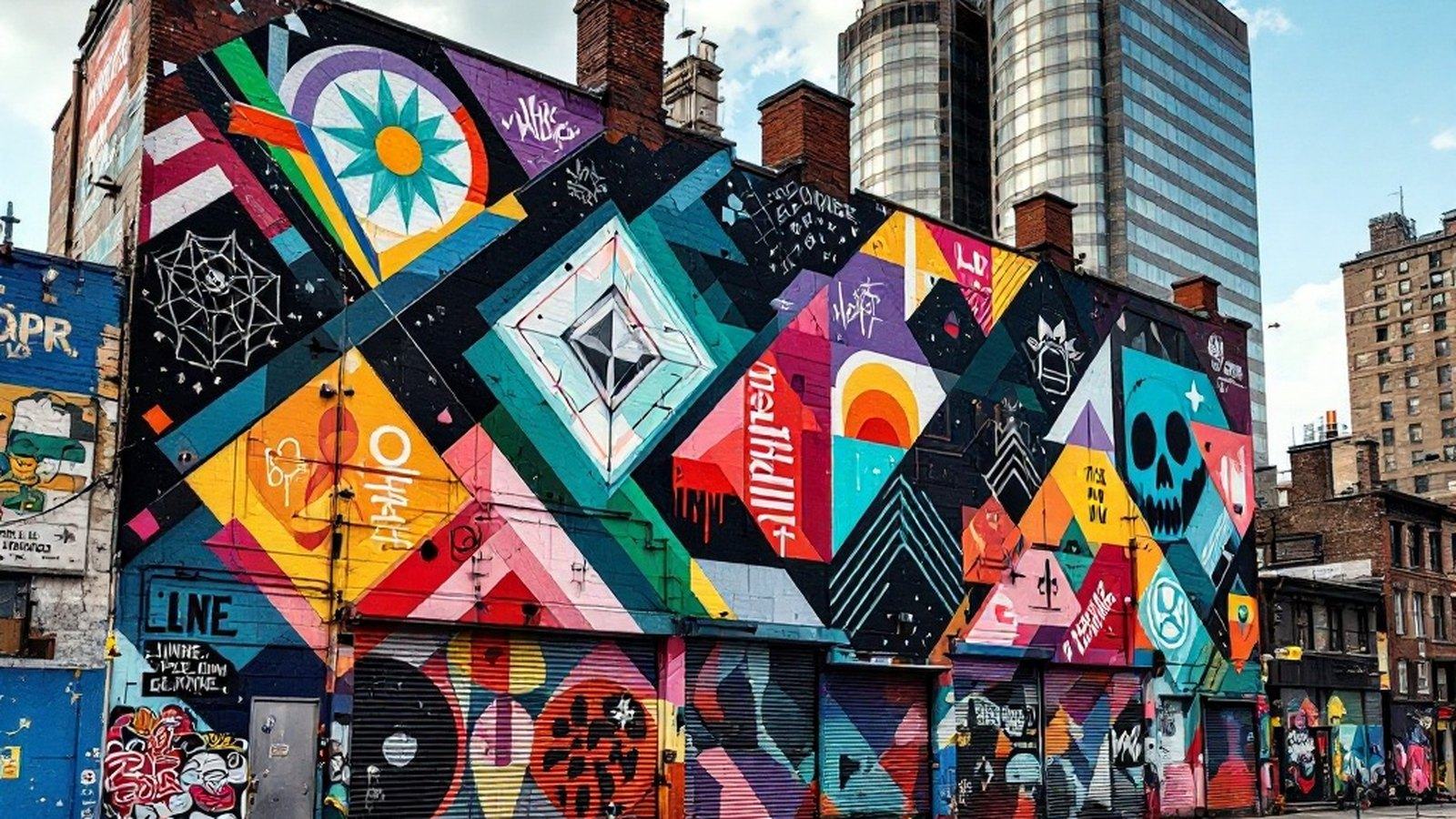
Five years after 5 Pointz fell, Long Island City's legal walls are still figuring out what they owe the street.
01The Shadow of the Mecca
For roughly two decades, the warehouse complex at 5 Pointz — curated by aerosol artist Jonathan "Meres One" Cohen — functioned as the undisputed capital of New York's outdoor aerosol art scene. Writers from across the city and the world came to Jackson Avenue to paint legally, to be seen, and to build a legacy in layers. Then, in November 2013, developer Jerry Wolkoff whitewashed the entire complex overnight, ahead of demolition. The murals were gone before dawn. What followed was a landmark federal lawsuit under the Visual Artists Rights Act of 1990 (VARA), ending in a 2018 ruling — upheld on appeal — that awarded damages to dozens of artists whose work had been destroyed without proper notice. The case established, for the first time at this scale, that aerosol murals could qualify as works of "recognized stature" deserving legal protection.
- ~1993–20135 Pointz operates as a curated legal aerosol-art complex under Meres One.
- November 2013Overnight whitewash of all murals ahead of demolition.
- 2018Federal ruling awards damages to the artists under VARA; upheld on appeal.
02What Grew Back
The immediate neighborhood around Court Square didn't fill that void so much as negotiate around it. A handful of property owners and local business improvement districts have since sanctioned rotating-wall programs on the blocks between Jackson Avenue, Thomson Avenue, and the Court Square subway hub — a stretch where glass towers and old industrial brick now coexist uneasily. The model is familiar: artists are invited, walls are assigned, work stays up for a season or a year before the next round. It is legal, it is organized, and it keeps the neighborhood legible as a place that takes visual culture seriously.
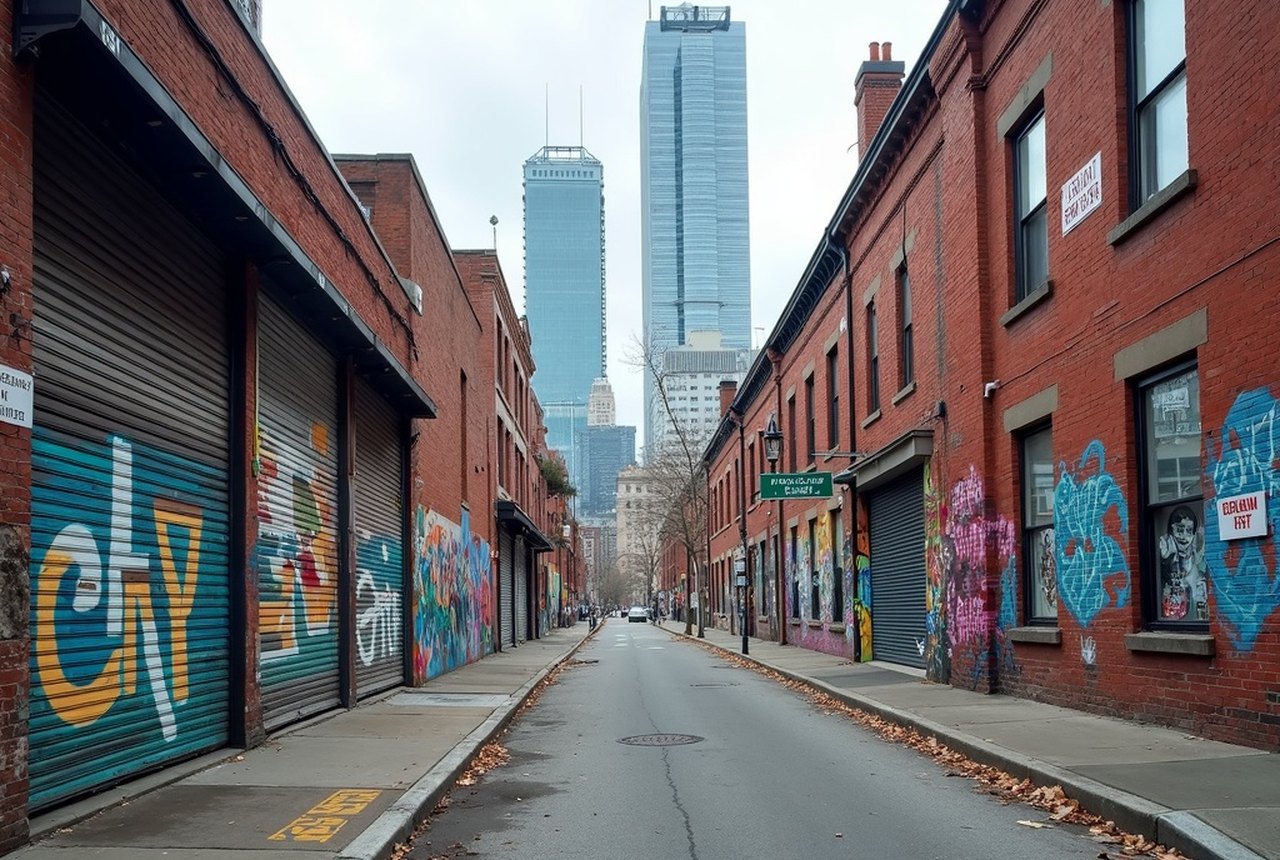
What it isn't, is 5 Pointz. The original complex worked because Meres One ran it with a writer's eye — merit-based, reputation-driven, accountable to the culture rather than to a community board or a branding calendar. A rotating-wall program administered by a BID operates on different logic: it tends toward the presentable, the photogenic, the inoffensive. That isn't a criticism of individual artists, many of whom do serious work within those constraints. It's a structural observation about who controls access to the wall.
A wall can matter. Paint deserves protection. That precedent quietly changed the conversation citywide.
Court Square's current murals are worth seeing. The density isn't what it was on Jackson Avenue in 2012, and neither is the urgency. But the legal precedent 5 Pointz left behind — that a wall can matter, that paint deserves protection — has quietly changed how writers and property owners talk to each other across the city. That conversation is ongoing, and it's happening in part right here.