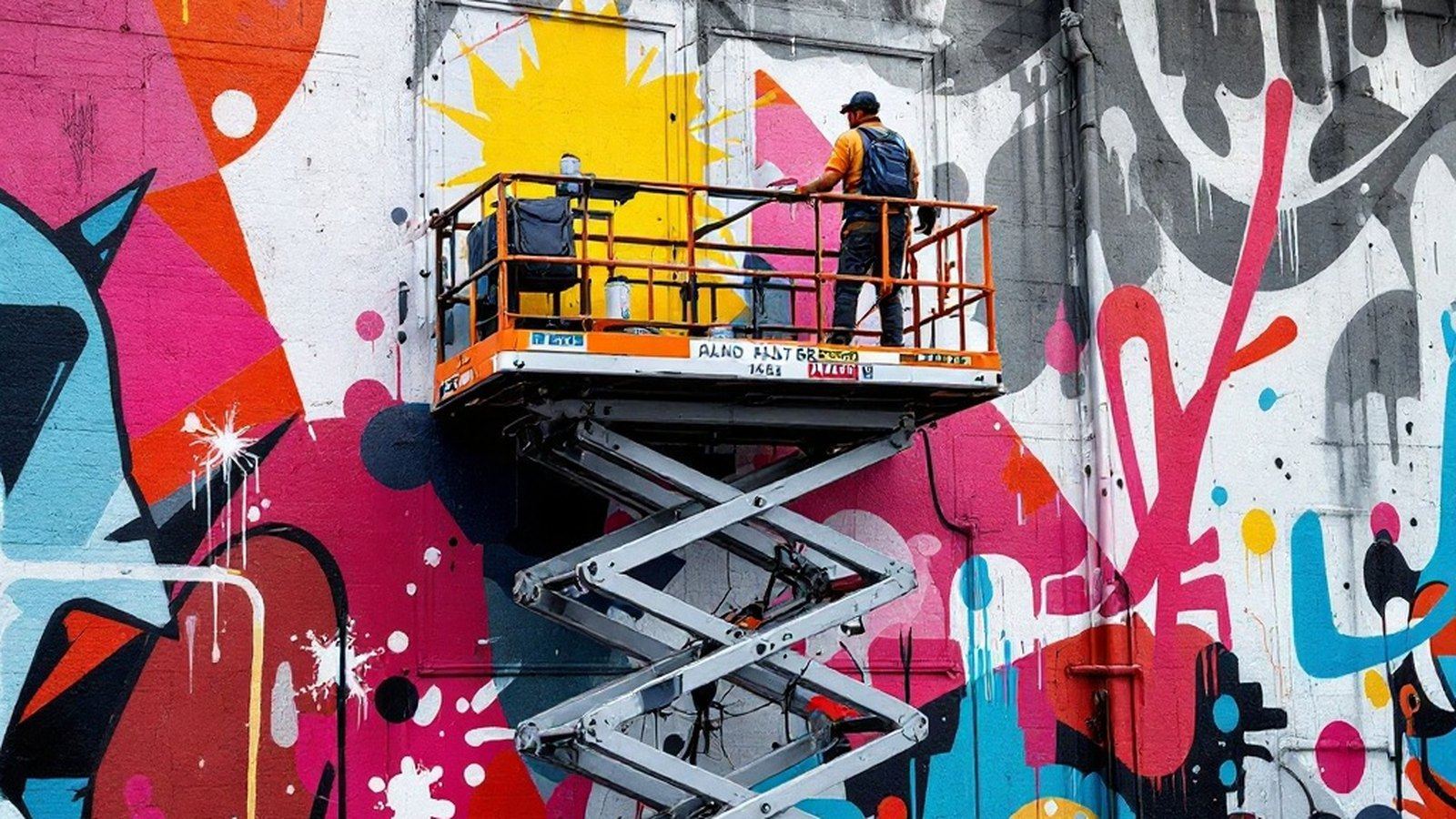
Legal street art sounds like a contradiction in terms. Graffiti writing built its identity on trespass — the subway system as an unwilling canvas, the buff as an adversary, the risk as part of the grammar. But the legal mural has become the dominant public-art form in twenty-first-century New York City, and its economics are more complicated than a spray can and a handshake.
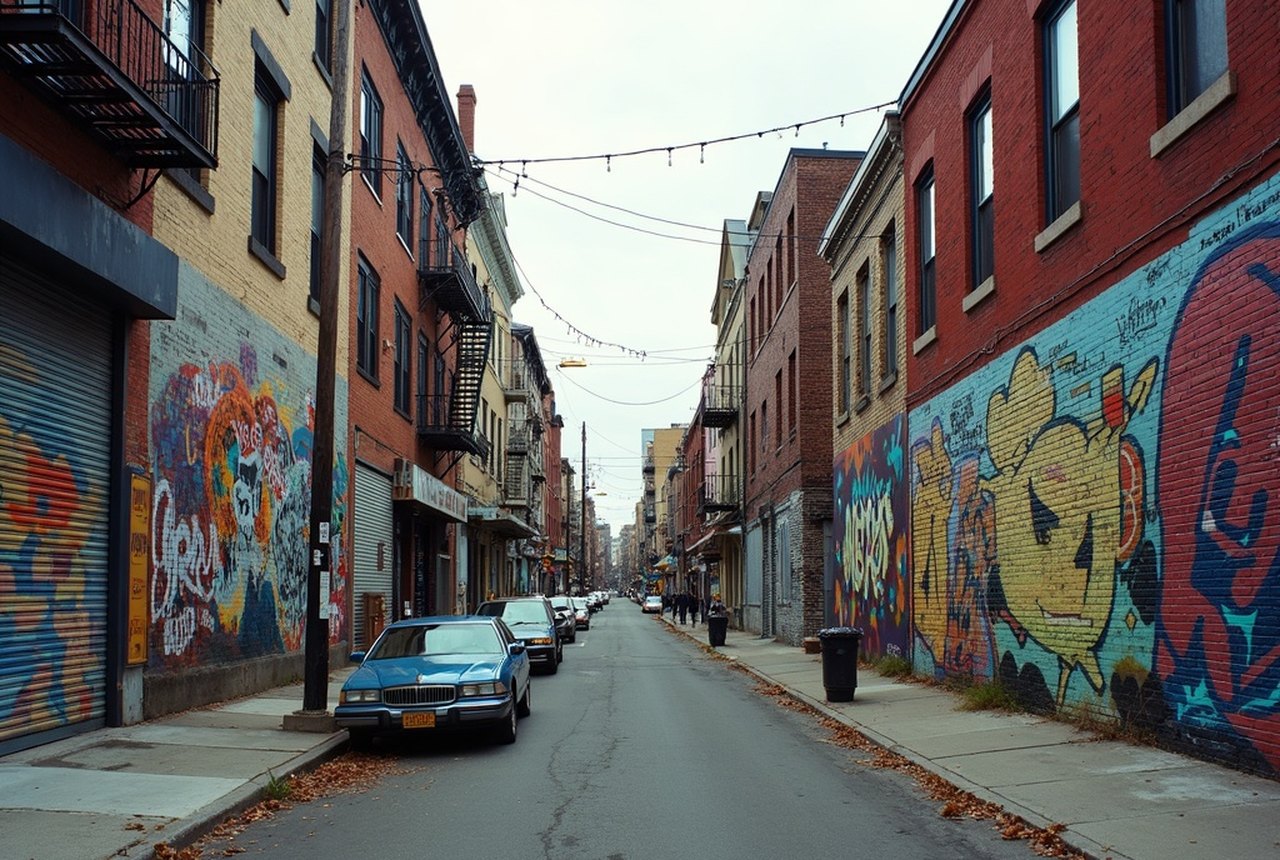
Understanding how a wall actually gets permitted — who talks to whom, who pays, who holds the power — tells you something important about what ends up on it. The legal mural now blankets building sides from Bushwick to the South Bronx, and every one of those walls began with a negotiation nobody photographed.
01Finding the Wall: Owners, Brokers and Cold Calls
The first step in any legal mural project is the one that never makes it into the Instagram caption: someone has to ask. In New York, that ask goes to the property owner, and property owners are not a monolithic group. A wall in Bushwick might belong to a family that has held the building since the 1970s; a wall in Long Island City might sit on a warehouse owned by a real-estate holding company; a wall in Harlem might be on a building recently sold to a developer with a brand-new interest in "community engagement." Each scenario produces different negotiations with different leverage dynamics.
Collectives like the Bushwick Collective — which has been coordinating legal murals on Wyckoff Avenue and surrounding blocks since the early 2010s — have developed years of established relationships with the property owners on their corridors. That history means they can move relatively fast: the owner already knows what the program looks like and what legal protections they carry. For independent artists or smaller organizations working outside established frameworks, the cold call is still the reality. An artist or a curator identifies a wall — usually because it's blank, or because the previous piece has been buffed — and starts working backward through city property records and LLC registrations to find a human being who can say yes.
That research alone can take days. New York's property ownership structures are famously opaque; a building can sit behind two or three corporate layers before you reach an actual decision-maker. When contact is made, owners' responses range across a wide spectrum: some are enthusiastic and have already been approached before, some are suspicious and want to know exactly what the image will be, some want payment for access to the wall, and some — particularly those who've watched property values climb around mural corridors — want a piece of the sponsorship action. Others simply say no, and no negotiation follows.
02The Money: Who Pays and Where It Comes From
The economics of the legal mural exist on a spectrum from the fully volunteer to the commercially produced, and the funding source shapes every decision downstream.
At the grassroots end, some walls still happen the way they always did: an artist calls a favor with a building owner, buys their own paint and rolls up on a Saturday. The wall is free in the sense that no money changes hands — but the artist absorbs the cost of materials, which for a large-scale mural running several hundred square feet can mean thousands of dollars in paint alone. Premium exterior-grade spray paint — the brands serious muralists use — is not cheap, and a complex wall can require dozens of cans plus primer, rollers and lifts.
Above that baseline sit the organizational models. A collective or nonprofit applies for public funding — through agencies like the New York City Department of Cultural Affairs, or through foundations and BIDs — and uses that money to pay artists a fee, cover materials and sometimes compensate building owners for access. This is the model that has allowed programs like the Groundswell mural organization to work in schools and community spaces across the five boroughs for decades. The artist is paid, the owner is made whole, the community presumably benefits. The trade-off is the application process: grant timelines are long, requirements are specific and the work produced under these conditions often has to meet certain content criteria that a purely autonomous artist would never accept.
At the commercial end sits brand-sponsored mural work — the model that has attracted the most skepticism from writers and critics. When a corporation pays for a wall, the artist typically receives their most significant fee, but the client retains approval over the image. Sometimes that arrangement produces work of genuine quality; often it produces something that looks like a mural but functions like a billboard. The legal and financial architecture here is entirely different from the grassroots model: there may be a contract, a usage license, insurance requirements and a timeline measured in days rather than months.
| Grassroots | Grant-funded | Brand-sponsored | |
|---|---|---|---|
| Who pays | The artist — materials out of pocket | Agencies, foundations, BIDs | The client corporation |
| Artist fee | None — a favor and a Saturday | Modest but real; owner made whole | The most significant fee |
| Who approves the image | The artist (and a trusting owner) | Program criteria and funders | The client — approval retained |
| Timeline | A weekend | Grant cycles — months | Days, on contract |
03Permission, Protection and the Buff
Legal status carries real protections that writers working illegally never had. Under the Visual Artists Rights Act of 1990 — federal law — works of "recognized stature" on buildings cannot be destroyed without notice and an opportunity for the artist to remove or document the work. The 5Pointz case in Long Island City, where the building owner whitewashed dozens of murals overnight in 2013 before the building's demolition, became the landmark test of VARA in this context: a federal court ultimately awarded damages to the artists whose work was destroyed without proper notice. The decision reverberates through every commercial mural negotiation in New York today, and building owners and their attorneys know it.
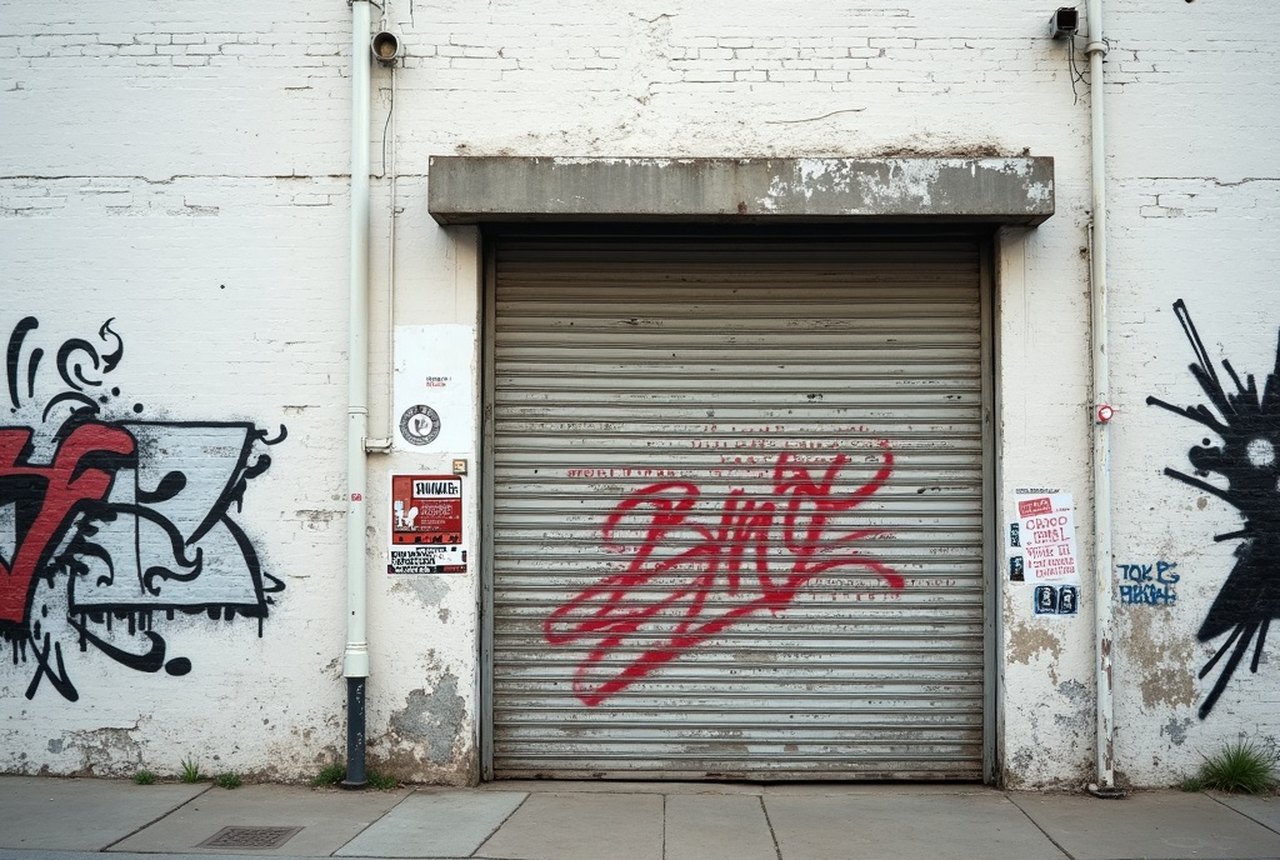
But VARA's protection is not automatic or universal. It applies to works of "recognized stature," a threshold that has to be argued and proven, not assumed. It does not protect against a building owner who follows the proper notification procedure, gives the artist 90 days to document or remove the work, and then buffs it anyway when the notice period expires. And it does nothing for the vast majority of illegal pieces, paste-ups and throw-ups that go up without any permission in the first place, and which property owners can paint over at will and do, constantly. The buff is still the default fate for most work on New York walls.
- 1990Visual Artists Rights Act enacted, establishing federal moral rights for visual artists.
- Early 2010sBushwick Collective begins organizing legal mural programming on the Wyckoff Avenue corridor.
- 20135Pointz building owner whitewashes the murals overnight; the VARA lawsuit follows.
- Post-2013Federal court awards damages to the 5Pointz artists; mural contract negotiations reshaped citywide.
The existence of legal protection also changes, in subtle and not-so-subtle ways, what artists choose to make. When a wall comes with a contract, a fee, an owner's approval and the expectation of longevity, the urgency that drives graffiti writing evaporates. The work is planned in advance, sketched in a studio, scaled up from a grid. The spontaneity that made the illegal piece thrilling — the sense that this image arrived overnight and might be gone by Tuesday — is replaced by something more deliberate. That isn't automatically worse, and some of the most ambitious and technically accomplished work being made in New York today is being made on legal walls. But it is different, and anyone who tells you legality is neutral is not paying close attention.
04The Curator's Role: Gatekeeper and Advocate
Between the artist and the building owner stands a figure that didn't really exist in the original graffiti-writing culture: the mural curator. In established programs, the curator or program director is the person managing all of the relationships simultaneously — vetting artists, negotiating with owners, handling contracts, managing timelines, interfacing with funders and mediating disputes when an owner doesn't like the direction a piece is taking.
That position carries a power that is worth naming honestly. The curator decides whose work gets proposed to which walls, and in a city where a high-profile wall can dramatically raise an artist's visibility, that's a significant form of influence. The best curatorial programs are transparent about their selection processes and actively recruit artists from the neighborhoods where they work, rather than importing well-known names and dropping them onto community walls with no local connection. The worst reproduce the same roster of already-established artists on every project and call it community engagement.
The gatekeeping function also runs in the other direction: a good curator advocates for the artist inside the owner relationship, pushing back when an owner wants to water down an image or introduce brand messaging into a work that was never intended to carry it. That advocacy is never guaranteed, and artists working with smaller organizations or for the first time in a commercial context often lack the leverage to push back effectively on their own.
What doesn't change, regardless of how the permission structure is built, is the wall itself. It faces the street, it belongs to the people who walk past it, and once the paint dries, the contract and the cold calls and the grant applications become invisible.
The work either earns its space or it doesn't. That's the one part of the equation that legality can't solve.