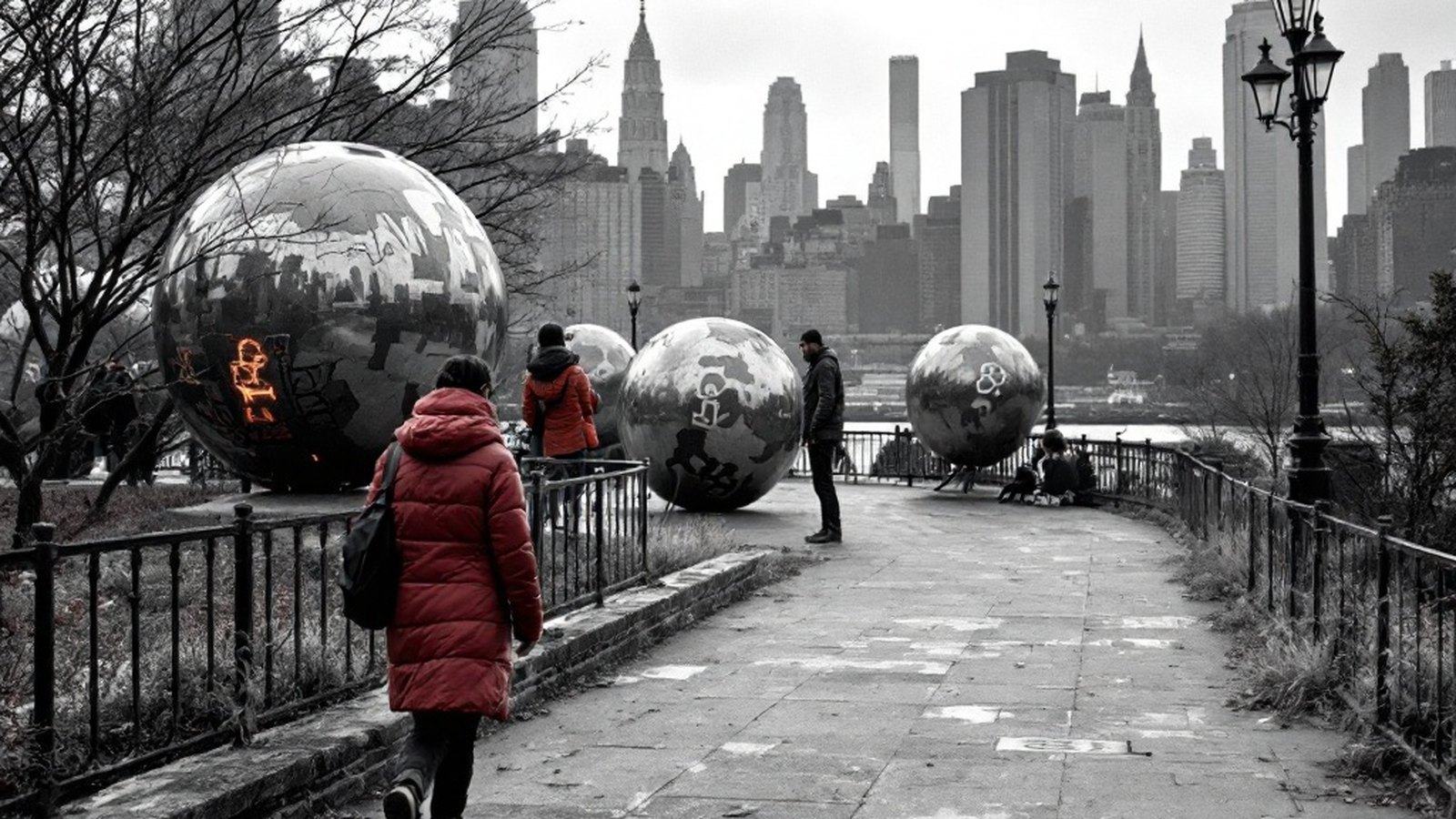
On a Queens waterfront reclaimed from rubble, women are bending steel and rewriting who gets to make monumental art.
01Sparks on the Waterfront
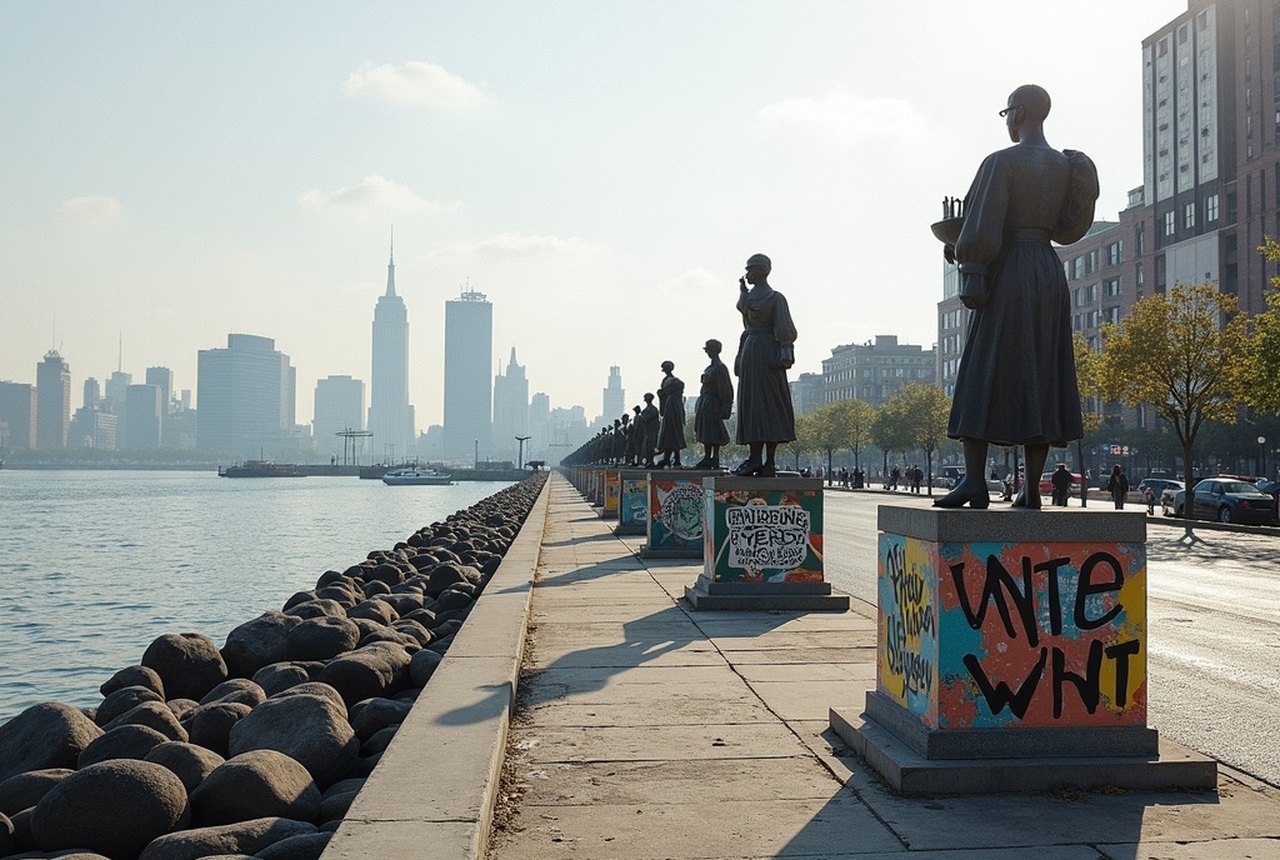
Stand on the bank of the East River in Long Island City on any given weekday and you might catch the blue-white flicker of a welding arc cutting through the afternoon haze. That's Socrates Sculpture Park doing what it has always done: turning a former landfill into a working studio, wide open and free, where art gets made in public view and the Manhattan skyline minds its own business across the water.
Mark di Suvero and a coalition of local residents founded the park in 1986, wrestling a derelict dumpsite on Vernon Boulevard back from decades of neglect. The ethos was radical in its simplicity — outdoor space, access to heavy equipment, no admission charge, ever. Artists-in-residence work on-site while visitors wander past. The sculpture stays up, gets rained on, rusts a little, belongs to the neighbourhood. Queens keeps it honest.
What that founding ethos also created, perhaps less intentionally, was one of the rare outdoor fabrication environments in New York City where a sculptor working at genuine scale — we're talking multi-ton steel, ground anchors, structural welds — doesn't need a commercial studio contract or an institutional budget to get there. That democratising pull has drawn generations of artists who might otherwise have been priced out of monumental metalwork entirely.
02Heavy Metal, Different Hands
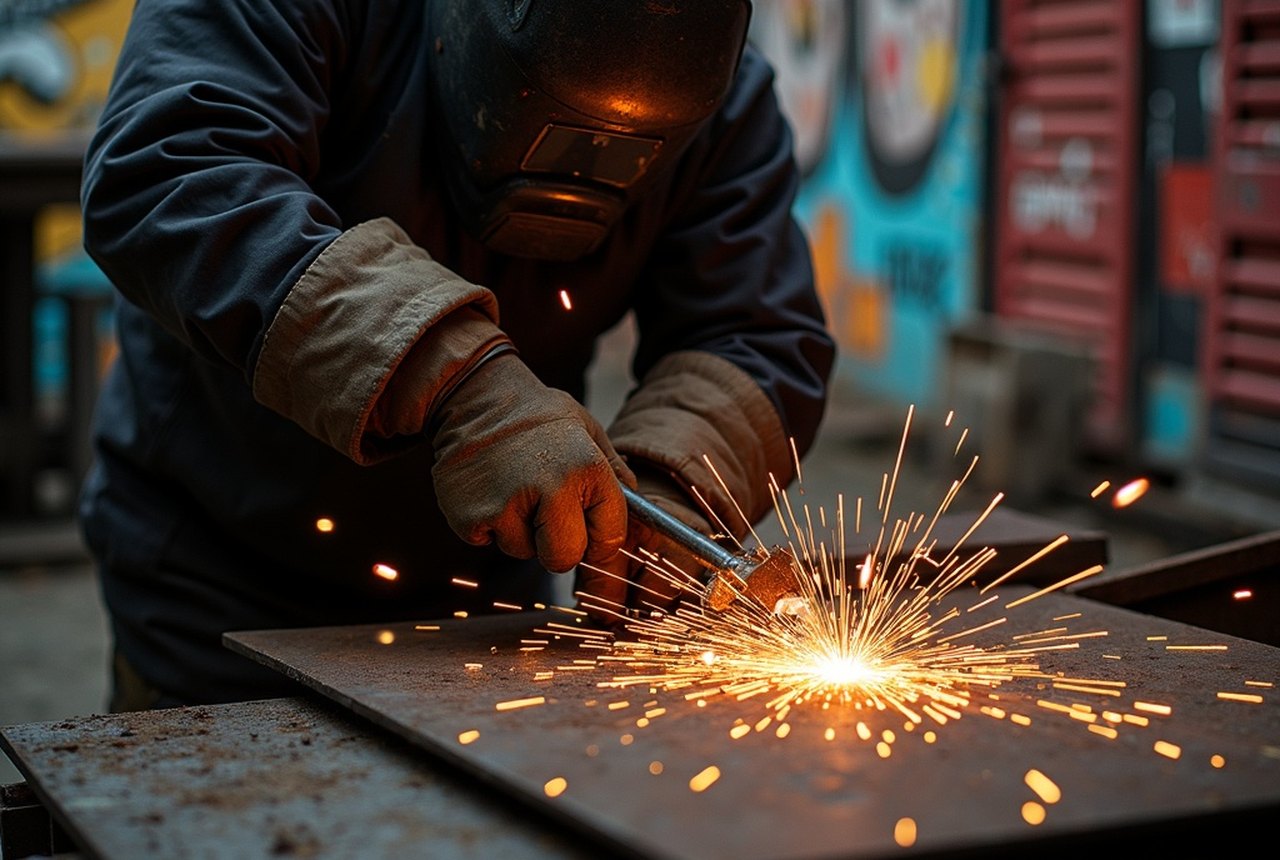
Welding is physical in ways that painting is not. The helmet goes down, the rod or wire feeds, and the arc temperature runs somewhere north of 6,000 degrees Fahrenheit — hot enough to fuse quarter-inch plate steel as if it were clay. You feel it in your forearms, your shoulders, the small of your back. Large-scale outdoor sculpture demands structural thinking as much as aesthetic vision: understanding how a form will bear wind load, how weld seams will behave through freeze-thaw cycles, how scale shifts meaning when a piece moves from maquette to ten feet tall.
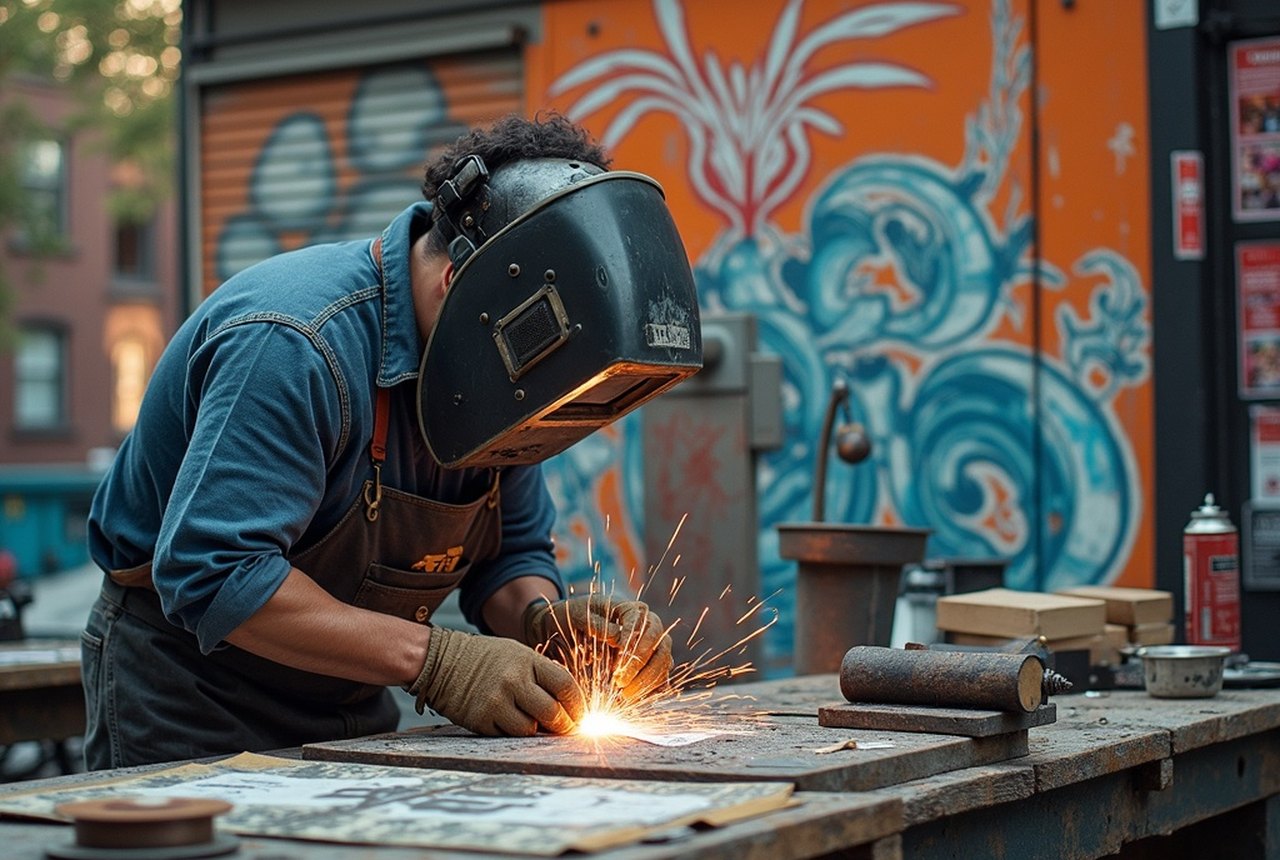
Metalwork at this level has historically skewed male — shaped by trade-union pipelines, military manufacturing culture and the unspoken assumption that heavy industry was men's territory. That assumption has always been wrong, and the artists moving through Socrates have helped prove it across decades. Women welders and fabricators working in the park's residency and fellowship programs have made work that spans the full range of what outdoor steel sculpture can do: brutal geometry and organic curve, raw mill finish and painted surface, objects that anchor and objects that seem to float despite themselves.
The craft knowledge required is not mystical — it is learned, practiced and passed, and Socrates has consistently been a place where that transmission happens in public. Watching a sculptor position a jig, tack-weld a joint and then run a full bead is instruction without tuition. The park's open-studio model means that informal mentorship simply happens: someone doing it alongside someone learning, on a waterfront where nobody is charging for the view.
03What the River Sees
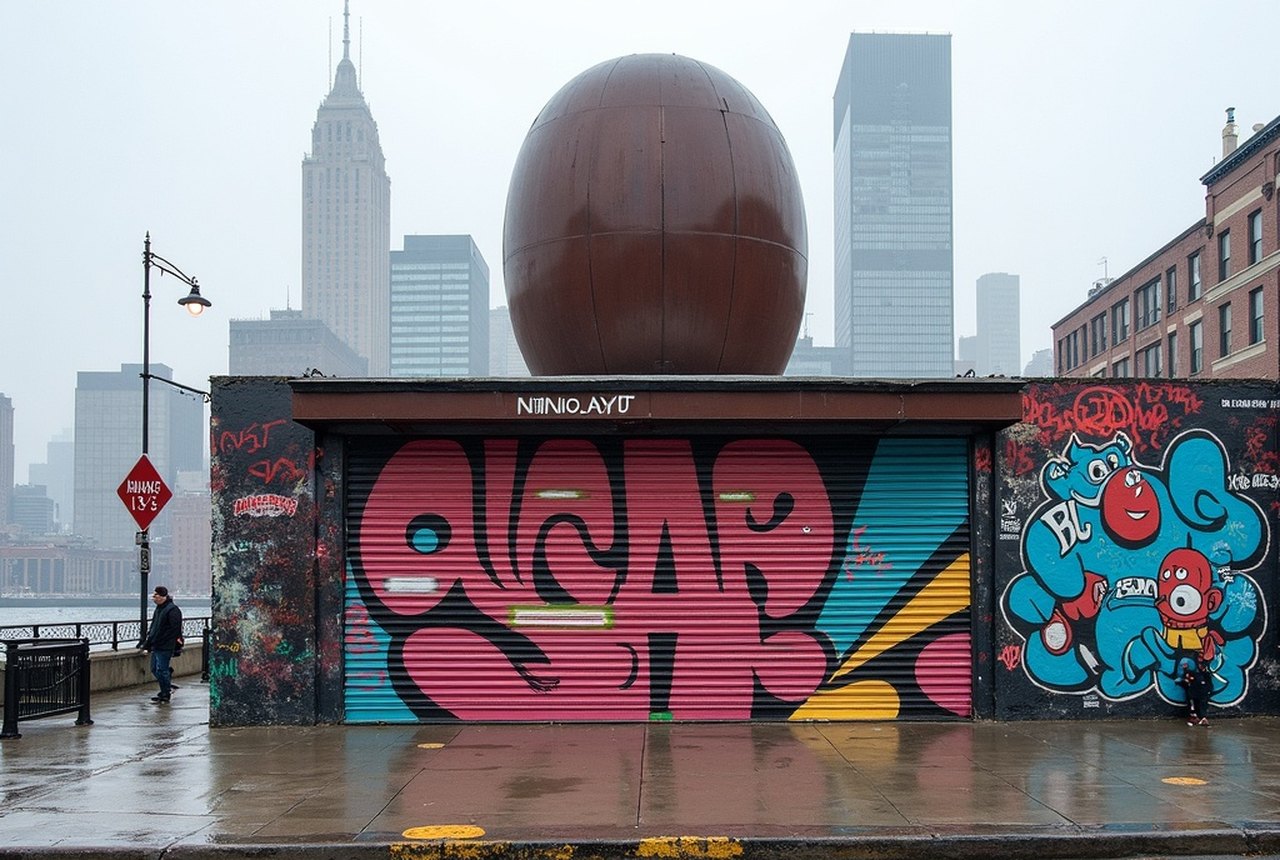
The finished work at Socrates sits outside through all four seasons, which is its own argument. A piece that survives a Queens winter — wind off the river, salt air, the occasional freezing rain — is making a different claim on permanence than anything behind glass. Large-scale outdoor sculpture by women artists occupying that specific terrain, that specific scale, refuses a particular kind of diminishment. The objects are too big, too heavy and too there to be overlooked or domesticated.
The grinder marks stay. The weld lines read. Steel is honest about how it was made.
Socrates has never been a white-cube operation, and that matters. The park doesn't ask its artists to sanitise their process or translate their work for a collector's living room. Steel is honest about how it was made, and so, largely, is the park itself — a place built from reclaimed land by people who thought public art should be genuinely public, not ticketed, not curated into tasteful invisibility.
The women making large work on that waterfront are doing something the founders would recognise: taking the space seriously, taking the material seriously, and producing objects built to outlast the conversation about whether they belong there at all.
- 1986Mark di Suvero and neighbours establish Socrates Sculpture Park on a former landfill in Long Island City.
- 1986 → nowThe park operates as a free, open-access outdoor studio and exhibition space — heavy equipment, no admission, art made in public view.