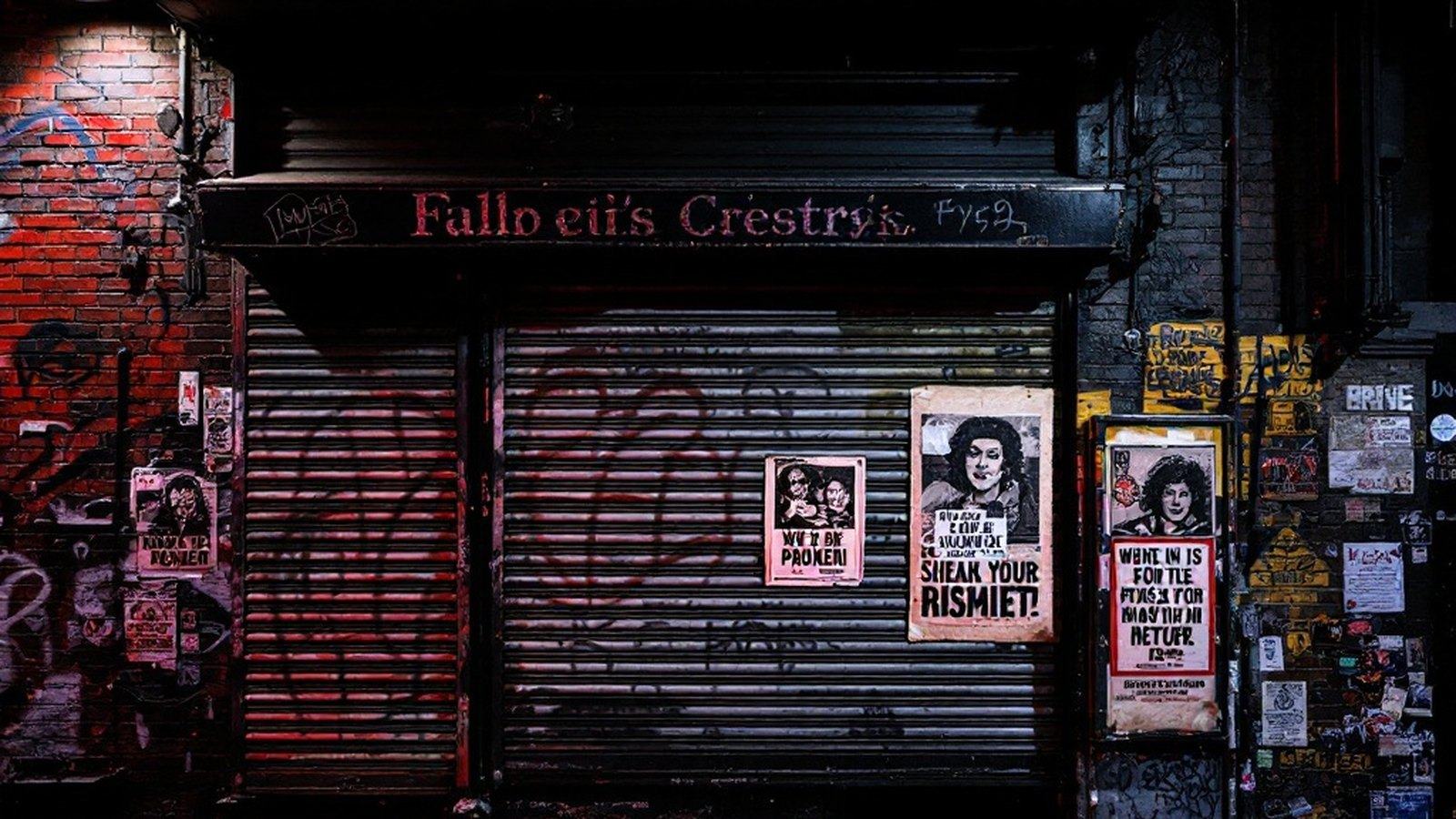
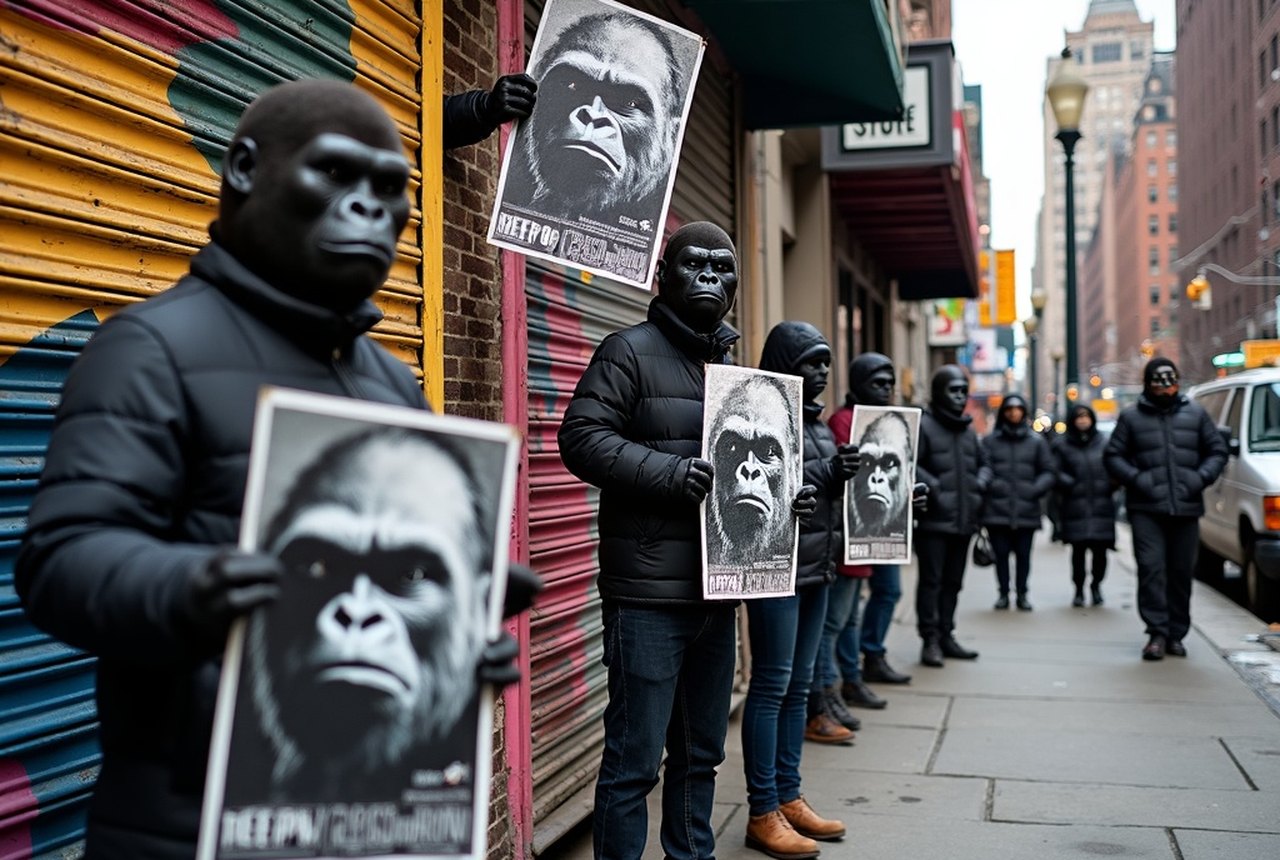
In 1985, a group of women artists walked into the art world's most visible spaces and refused to leave quietly. They wore gorilla masks. They took the names of dead women artists — Käthe Kollwitz, Frida Kahlo, Remedios Varo — as aliases. They pasted posters on SoHo gallery walls in the middle of the night.
01Gorillas at the Gate
They called themselves the Guerrilla Girls, and in doing so they invented a template for activist art that still hasn't been bettered: make the data undeniable, make the presentation impossible to ignore, and make sure nobody can dismiss it by attacking the messenger.
Their first posters named names. A 1985 broadsheet listed galleries showing fewer than ten percent women — galleries that real collectors read, that real curators courted. The New York art world, then as now concentrated in a tight circuit of dealers, museum boards and auction houses, suddenly had a mirror shoved in its face. The image wasn't flattering. At the time, major Manhattan institutions collected and showed men at ratios that would embarrass a 1950s boardroom.
02"Do Women Have to Be Naked to Get Into the Met Museum?"
The question that made them famous appeared on a 1989 billboard proposal for the Metropolitan Transportation Authority. The MTA ultimately rejected it, so the Girls bought advertising space on New York City buses and ran it themselves — a reclining nude figure (Ingres's Grande Odalisque, redrawn with a gorilla mask) beside the stat that less than five percent of the artists in the Met's Modern Art sections were women, while eighty-five percent of the nudes were female. The arithmetic alone is the argument. No manifesto required.
That poster has become one of the most reproduced works in feminist art history, and it holds up precisely because the numbers do the heavy lifting. The Guerrilla Girls updated the statistics in subsequent decades, reissuing the piece as the gap stubbornly persisted. Museums would shift the percentages slightly, issue statements, mount a show of women artists — then the numbers would slide back. The poster kept coming back too.
Their method is essentially journalistic: gather the facts, make them visual, distribute them where the guilty parties cannot avoid them. Posters went up on Lower East Side walls, in Tribeca, in the West Village. Billboards landed in cities across the country and, eventually, across Europe. They took out ads in Artforum. They showed up at art fairs in the masks. They performed, lectured and demonstrated with the gorilla heads firmly in place — the anonymity isn't a gimmick, it's the point. The work is the work, not the CV behind it.
03Still Masking
The collective's membership has shifted over the decades — some original members departed and formed splinter groups (Guerrilla Girls on Tour, Guerrilla Girls BroadBand), each carrying different threads of the practice into theatre and digital spaces. The core group continues, and continues to update its targets: Hollywood representation data, gender gaps in museum leadership, the racial demographics of permanent collections. The issues evolved; the methodology didn't need to.
What makes the Guerrilla Girls genuinely New York, genuinely street-level, is the medium they chose: the poster, the public wall, the billboard, the sticker. Not the gallery statement. Not the white-cube installation first. They understood — the way writers bombing the IRT understood — that the city's visual field is a contested space, and that occupying it without permission is itself the message. Their posters carry the same confrontational grammar as a tag on a subway car.
I was here. You saw this. You cannot unsee it.
Thirty-plus years in, the masks are still on. The data is still bad. And somewhere in the city tonight, a new poster is probably going up.
Guerrilla Girls
Collective · New York · est. 1985
Anonymous feminist activist-art collective. Gorilla masks, dead women artists' names as aliases, and statistics as weapons — posters, billboards and bus ads that made the art world's numbers impossible to ignore.