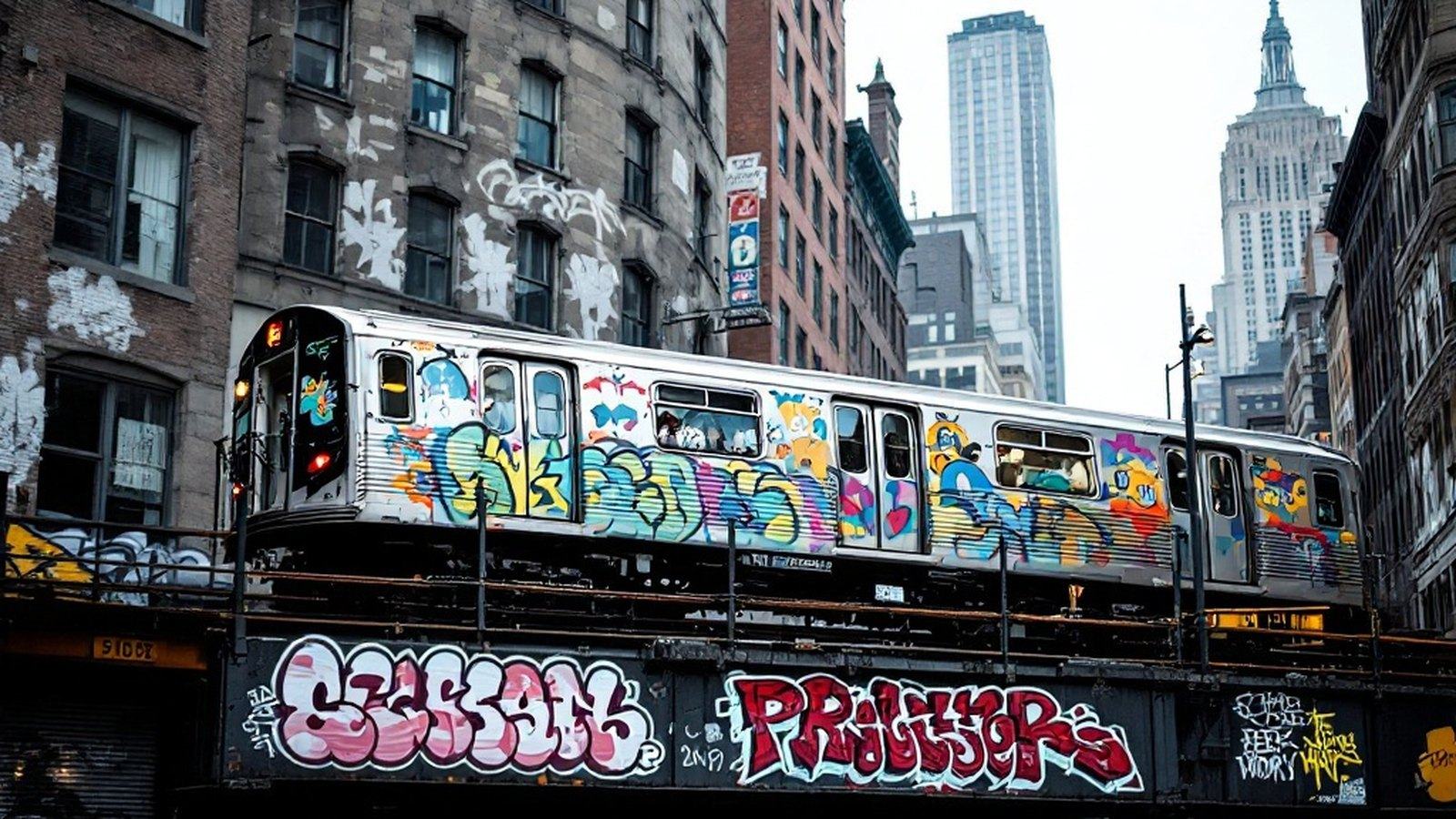
He didn't just write on New York's trains — he became inseparable from them. Michael Martin ran the whole system and left a record that still shapes how writers understand ambition.
01The Kid Who Read the City in Paint
Michael Martin was born in 1958, which means he was roughly thirteen years old when the New York City subway system began its transformation into the world's most consequential canvas. The year 1971 is the one graffiti historians return to again and again — the year TAKI 183, a Greek-American kid from Washington Heights, gave an interview to the New York Times that turned tag culture into a documented phenomenon. By then, kids all across the five boroughs were already marking their names on walls, benches, and the sides of trains, working out a new language of presence and territory in a city that offered them very little else. Martin, who wrote as IZ THE WIZ, came up in that moment and grew into one of its most consequential figures.
The tag itself had a swagger baked into it — the "wiz" suggesting mastery, wizardry, something beyond mere competence. And that swagger was earned on the trains. By the mid-1970s, Martin had developed a reputation for output that was staggering even by the standards of an era defined by obsessive productivity. He wasn't chasing style points alone, though his letters were clean and his color sense sharp. What distinguished him was scale and reach: the ambition to hit not just one line but many, not just one yard but several, not just once but continuously, insistently, across years.
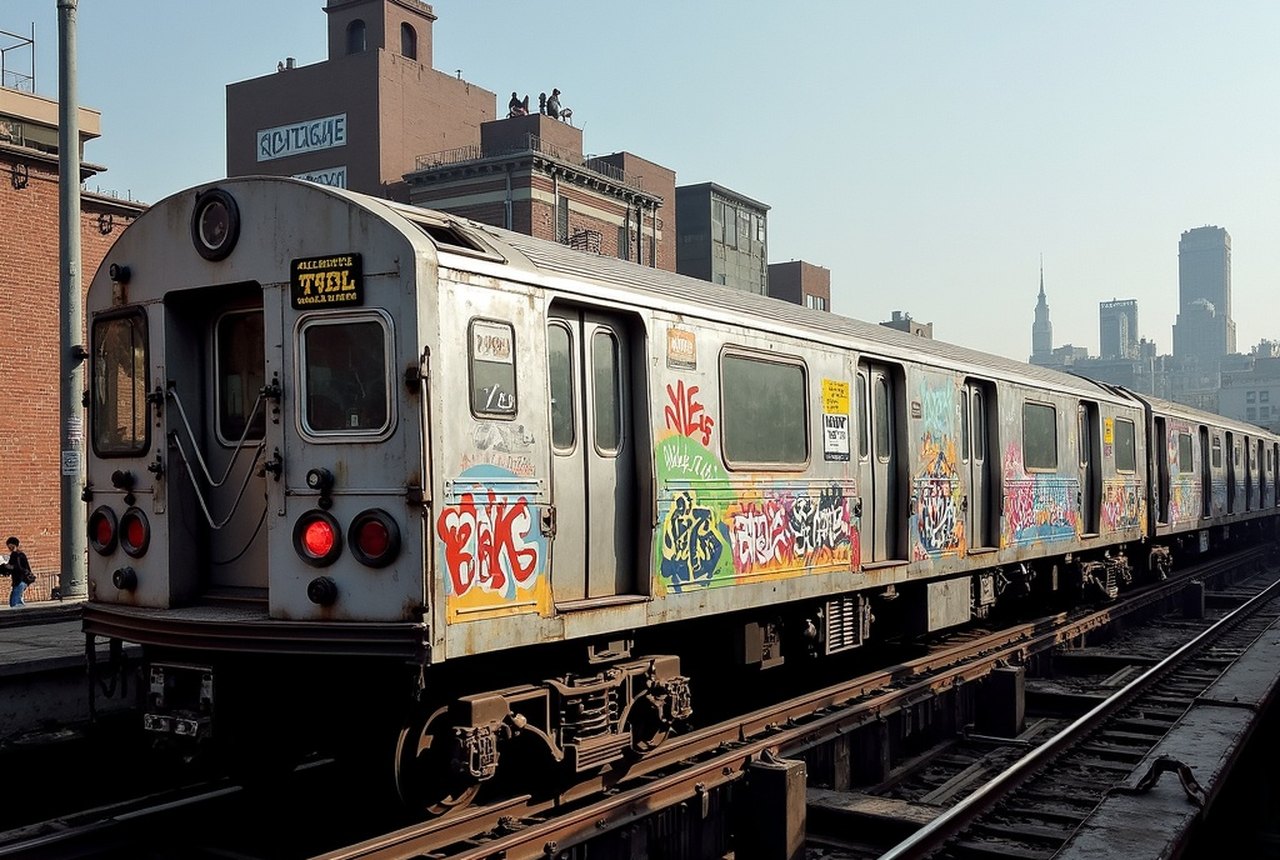
The subway system he was working in was a very specific kind of machine — underfunded, overcrowded, structurally deteriorating, and operating through a city in fiscal freefall. New York's near-bankruptcy in 1975 gutted city services, and the MTA ran on deferred maintenance and diminishing hope. Graffiti spread through that vacuum. Writers understood something intuitively that urban planners would spend years arguing about: the trains were the connective tissue of the city, and if your name was on them, your name was everywhere.
02All-City: What the Title Actually Cost
The concept of being "all-city" — having your name running on every line, visible across all five boroughs — was the grail of the subway era. It wasn't simply a matter of painting enough trains. It required access to multiple yards and lay-up spots, the logistical nerve to move through transit police territory repeatedly, and the stamina to sustain a campaign over months and years. Plenty of writers reached for it. Iz the Wiz got there, and stayed there.
His speciality was the wholecar — a piece that ran the full length of a single car, side to side, top to bottom. This was the most ambitious format in the form: more paint, more time in the yard, more exposure to arrest, and far more technical challenge than a throw-up or even a standard piece. Writers who could execute wholecars consistently were operating at a different level, and Martin did it prolifically. The volume he maintained across the late 1970s and into the 1980s is the detail that separates him from writers who were merely good. The trains moved his work through the city day after day, and the city — or at least the segment of it that was paying attention — saw it.
He was part of a generation whose work on the trains was happening concurrently with the emergence of hip-hop as a cultural force in the Bronx and across the outer boroughs. The connections between those movements — the DJs, the MCs, the b-boys, and the writers — were real and social, not just metaphorical. They shared neighbourhoods, parties, and a fundamental understanding that visibility was power in a city that preferred certain people to remain invisible. Graffiti writing was not incidental to that moment. It was native to it.
| Writer | Known for |
|---|---|
| LEE (Lee Quiñones) | Major subway-era writer, later gallery artist |
| DONDI (Donald White) | Precise, innovative letterforms |
| SEEN (Richard Mirando) | Prolific Bronx writer, among the era's most documented |
| DAZE (Chris Ellis) | Transitioned to gallery and fine-art practice |
| BLADE | One of the highest-volume wholecar painters |
| FUTURA 2000 | Pioneered abstract approaches to graffiti |
What made the subway era distinct from anything that came before or after was the sheer democratic brutality of the transit system as a display mechanism. A piece painted in a Brooklyn yard could end up running through Midtown Manhattan within hours, seen by hundreds of thousands of people who had no context for it and no way to turn it off. It was broadcasting without a license, on the most-watched channel in the city. Iz the Wiz understood that calculus as well as anyone who ever picked up a Krylon can.
03The War on the Walls, and What Came After
The city spent much of the late 1970s and the 1980s fighting back. The MTA introduced a series of increasingly aggressive anti-graffiti programs, culminating in the Clean Train Movement launched under MTA president David Gunn in 1984. Gunn's policy was systematic and, eventually, decisive: any train that came into the yard with graffiti on it was taken out of service and cleaned before it ran again. The logic was attrition — if no piece ever ran, the motivation to paint would collapse. It took years to work, and during those years writers hit back harder, racing to finish pieces before the buff crews arrived. But the policy held. By May 1989, the MTA declared the subway system graffiti-free, and the era that had produced Iz the Wiz and the rest was officially over.
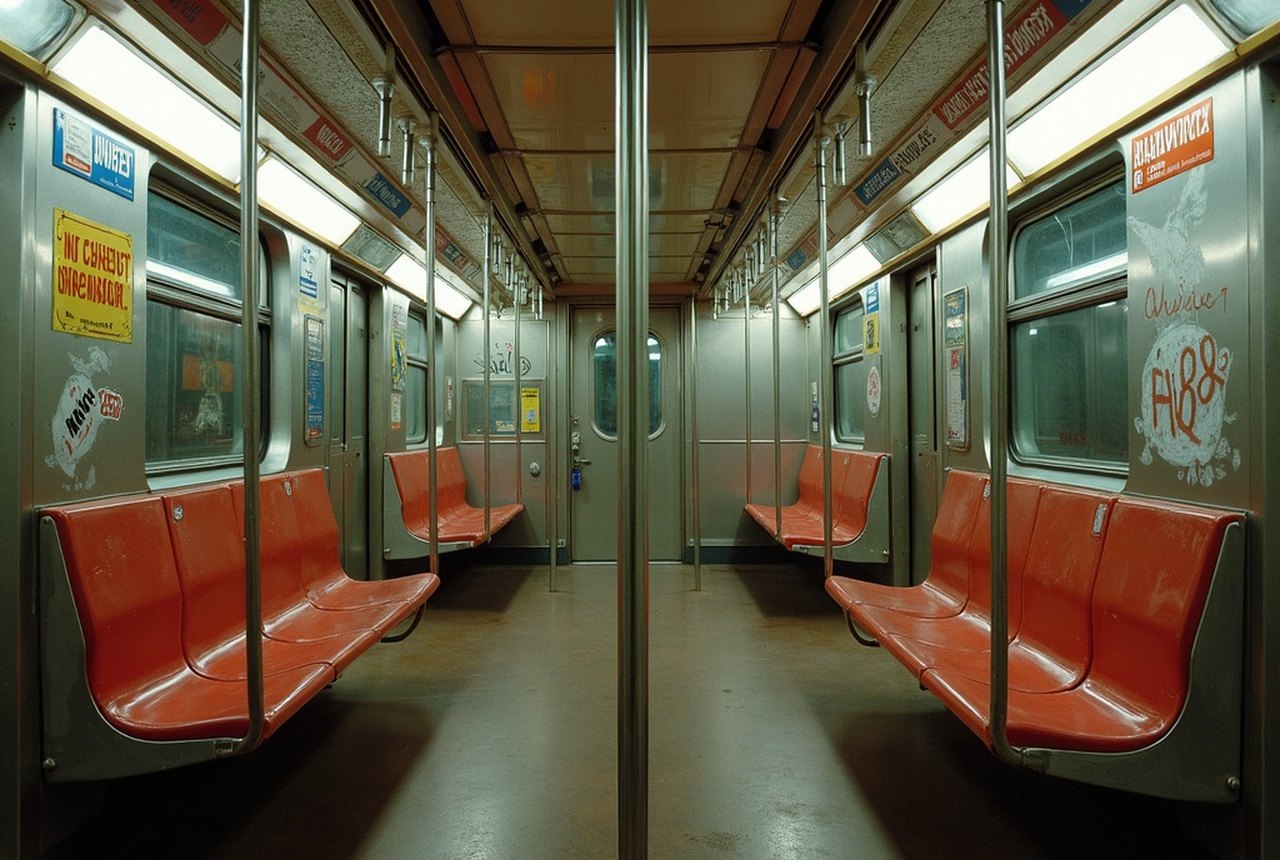
Martin kept writing — street walls, freight trains, the other surfaces that remained available once the subway cars were locked down — but the loss of the transit system as a medium was a genuine rupture. The trains had given the work its specific meaning: the movement, the reach, the city-as-gallery quality that no freight yard or highway wall could replicate. Writers adapted, and many of the figures from the subway era translated their skills into gallery work, commercial illustration, or the emerging international street-art scene. But adaptation is not the same as continuation, and the end of the Clean Train era closed something that had been, in its chaotic way, irreplaceable.
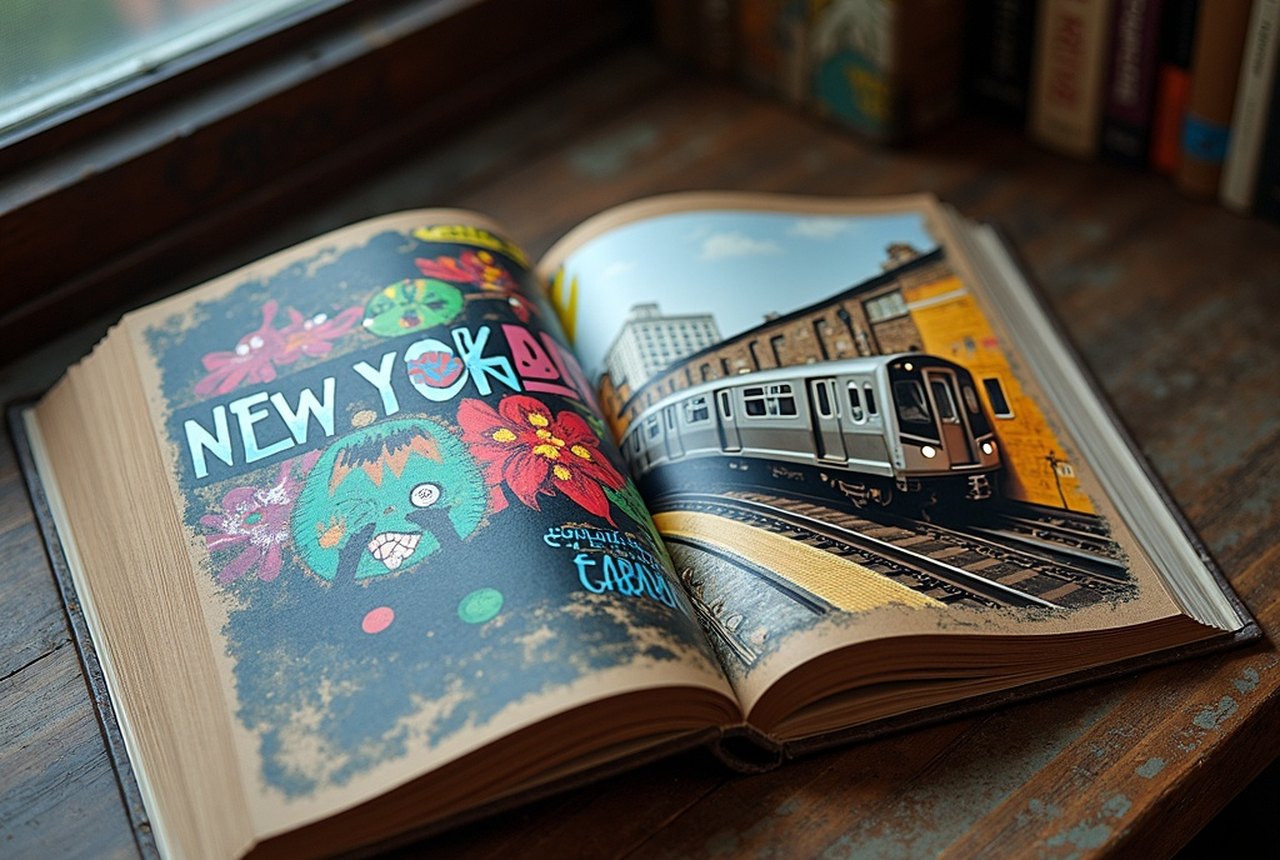
Martin continued to be respected in writing culture well after the subway era ended — not as a nostalgic figure, but as someone whose all-city status had been verifiable, documented in photographs circulated among writers and eventually preserved by historians and collectors. The archive of the subway era, much of it built from photography by figures like Henry Chalfant and Martha Cooper, gave the work a permanence the buff had tried to deny it. Chalfant and Cooper's book Subway Art, published in 1984, became one of the foundational documents of the form, and images of wholecars from the era — including Martin's — became part of how an entire generation of writers worldwide understood what the form could do.
Iz the Wiz died in 2009. He was fifty years old. The obituaries and tributes that circulated in writing communities afterward spoke of him with the specific reverence that belongs to people who did the thing for real, without hedging. In a culture that is deeply attentive to authenticity — to who actually put in the work, who actually hit the trains, who actually ran the city — his reputation had not depreciated.
04What a Wholecar Means Now
The subway era produced a body of work that was, by design and circumstance, almost entirely ephemeral. The buff destroyed most of it. What survives is photographic, secondhand, preserved in books and archives and the memories of the people who were there. Iz the Wiz spent years producing work that the city immediately set about erasing, and he kept producing it anyway — which is either futile or the purest possible statement of commitment to the act itself, depending on how you read it.
The work doesn't need to last to matter. It needs to run.
A piece on the IRT at rush hour, seen by a thousand people who don't know what they're looking at but can't miss it — that's not a failure of preservation. That's the work doing exactly what it was built to do. Martin spent roughly two decades building a reputation on surfaces that were cleaned within days of being painted, and that reputation outlasted him.
Iz the Wiz didn't live to see how thoroughly the subway era would be canonised. But he helped make the canon.
Iz the Wiz
Michael Martin · 1958–2009
All-city New York subway writer, famed for wholecar output sustained across the late 1970s and 1980s. One of the era's verifiable kings; his reputation never depreciated.
Chalfant & Cooper
Photographers · the archive
Henry Chalfant and Martha Cooper documented the subway era from the platforms and the yards; their 1984 book Subway Art became a foundational document of the form worldwide.