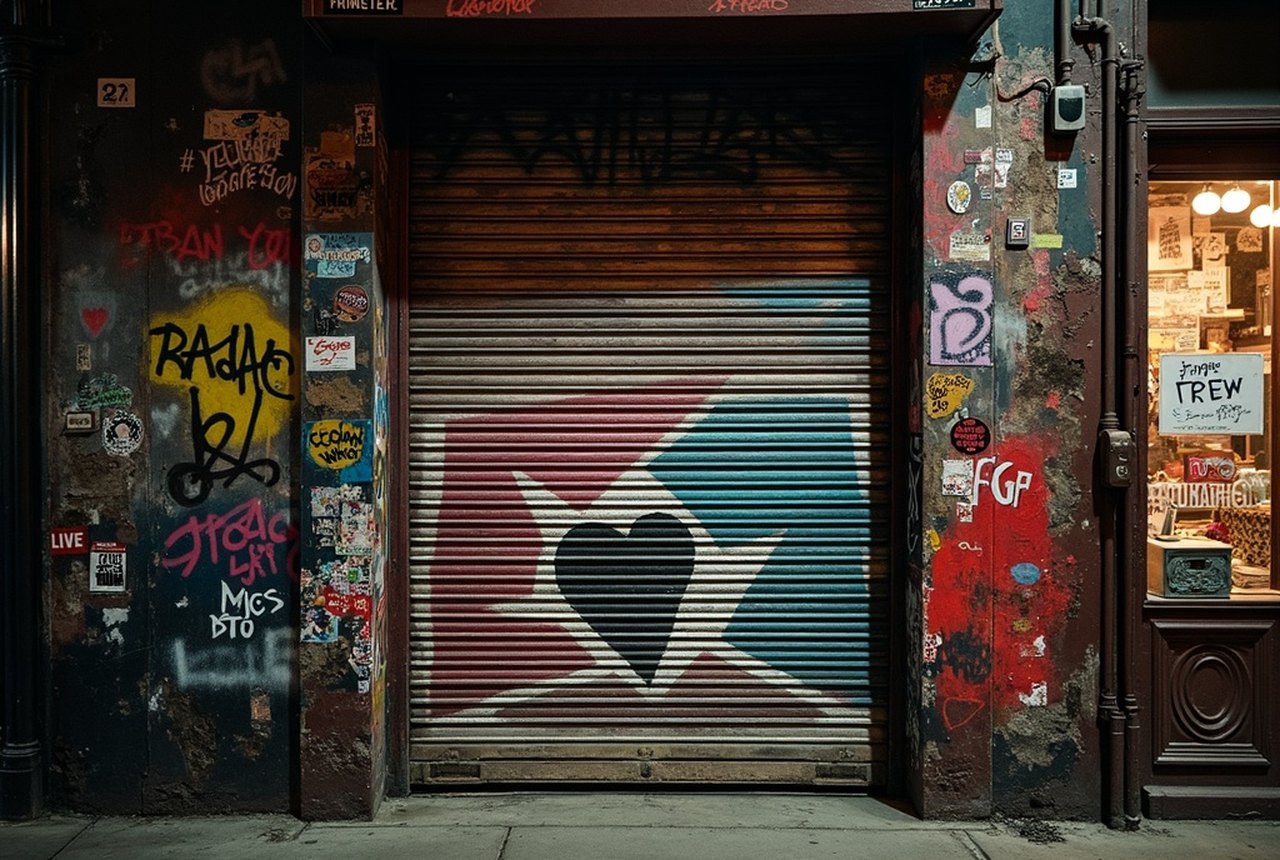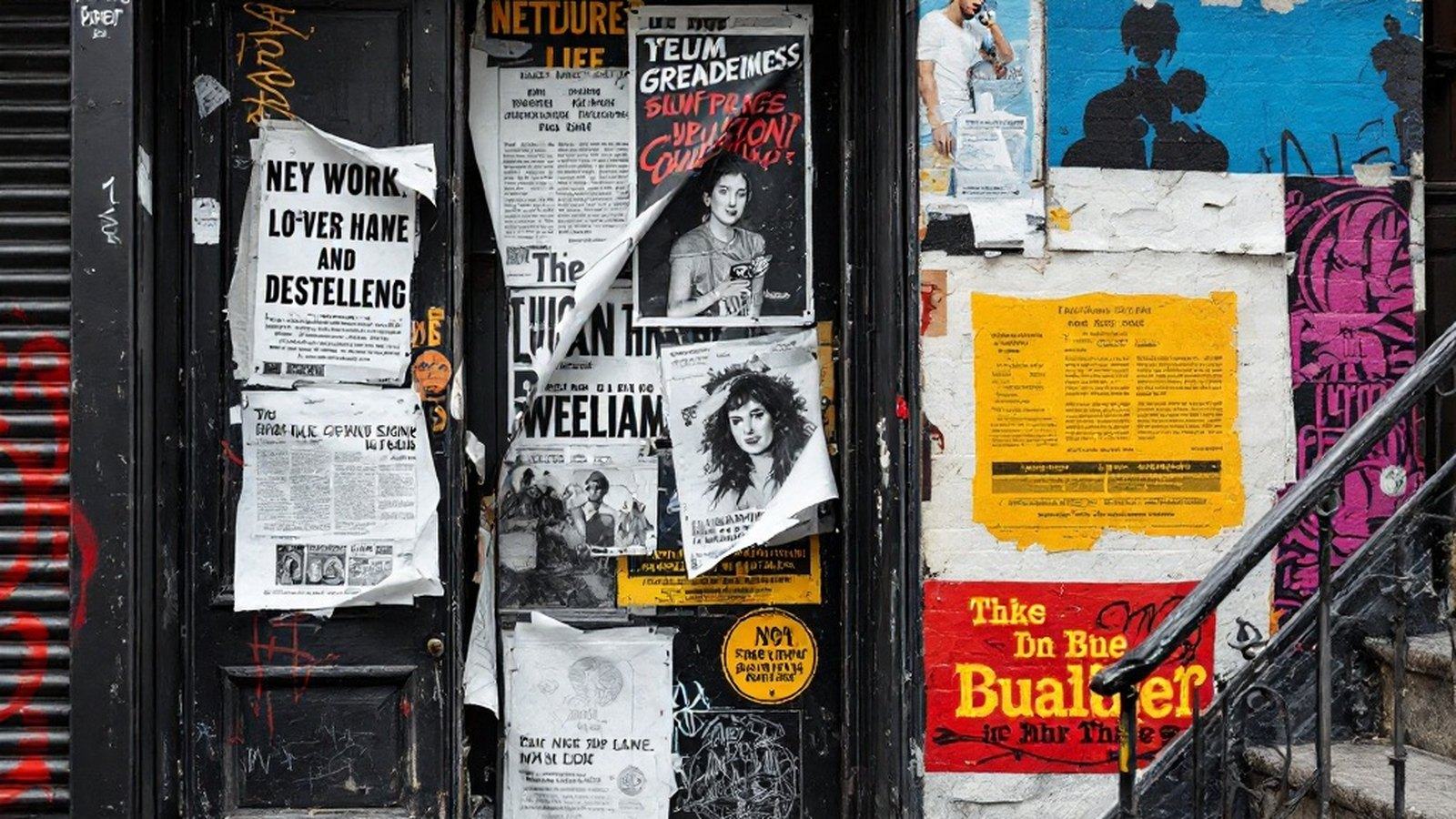
The flour-and-water medium that keeps the LES weird, one peeling corner at a time.
There is a particular smell to a freshly pasted wall — something between a bakery and a construction site, flour-thick and slightly sour. You catch it on Rivington at odd hours, or turning off Orchard onto Delancey, where a new layer has gone up overnight and the paper is still soft enough to blister under your fingernail. By noon it will be stiff. By next week it will be peeling at the corners, curling back to show whatever lived underneath: another print, a remnant of wheat-coloured glue, bare brick.
That cycle — wet, dry, tear, repeat — is the whole point. Wheatpaste is cheap and it is fast. A bucket of flour and water, a wide brush or a paint roller, a stack of prints rolled in a tube: the entire operation costs almost nothing and can be up in under a minute. That speed matters on a block where building super, passerby and city inspector all have competing opinions about what belongs on the wall.
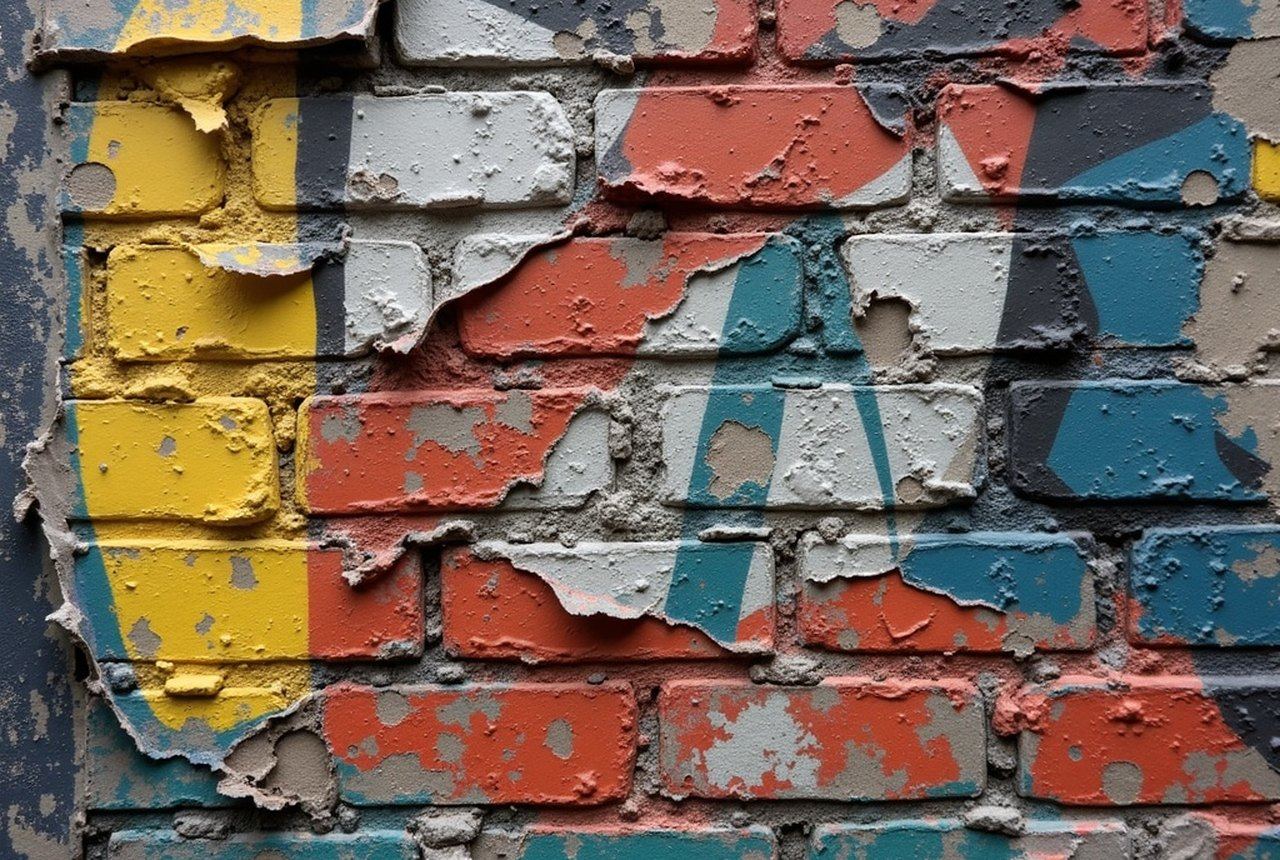
The Lower East Side has been paste-up territory for decades, partly for practical reasons. Old tenement stock means a lot of ground-floor blank brick, utility boxes and metal roll-down gates — surfaces that take paste readily. The neighbourhood's long run as cheap real estate kept it interesting long after other Manhattan blocks got scrubbed clean; the layers of printed paper that accumulate on a single doorway jamb read like a compressed archive of whoever needed to say something on a deadline. Political flyering, DIY show announcements and portrait prints stack up into something that is genuinely stratigraphic — you are looking at time.
Aesthetically, the medium rewards deterioration. A clean digital print slapped up on Monday starts to become something else by Friday: rain bubbles the ink, sun bleaches the edges, someone's shoulder catches the corner and lifts it. The image that remains is a collaboration between the artist and the street itself, which is a generous way of saying the city eats everything eventually. Paste-up artists mostly know this.
The impermanence is the proposition.
Come spring and fall the pace picks up — better weather, longer usable nights. Walk the stretch between Houston and Grand on the eastern blocks after midnight and you will find evidence of whoever was just here: the brush strokes still showing in the dried paste, like brushwork in varnish, legible only if you know to look.