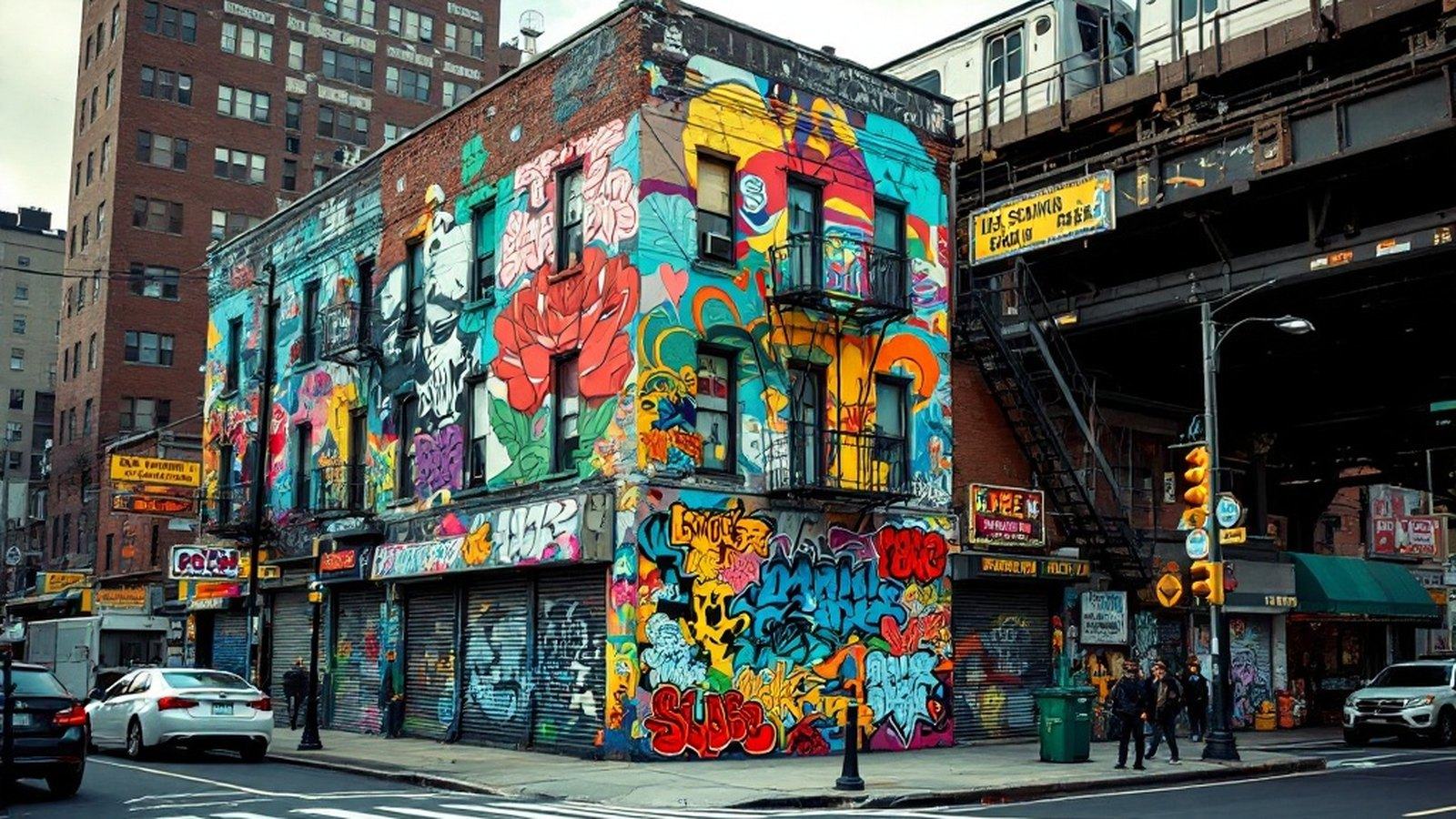
The Bronx isn't a destination you stumble into looking for street art — you go there knowing. It's the borough that incubated hip-hop, that fielded the writers who defined the New York subway era, and that has been producing large-scale public murals for decades through one of the most respected crews in the game. If you're still treating the outer boroughs as an afterthought after Bushwick, you're missing the origin story.
01The Hub and the South Bronx Corridor
Start at 149th Street and 3rd Avenue — The Hub — and walk. This commercial intersection has been a community anchor since the South Bronx rebuilding years, and the walls around it reflect that layered history. Head north and south along 3rd Avenue and dip west toward Morris Avenue and you'll find building-scale murals that range from memorial portraits to abstract Afro-futurist work. These aren't curated art-park installations; they're neighbourhood commissions, dedications to local figures, the visual texture of a working community.
This is also TATS Cru territory. The Bronx-based crew — Bio, Nicer, Meres, and their extended circle — have been producing some of the most technically accomplished large-format murals in the city since the early 1990s. Their work has gone up across the South Bronx, throughout the five boroughs, and internationally, but the Bronx is home base. They're responsible for dozens of the figurative memorial murals you'll see on these blocks — the ones where the lettering is immaculate, the faces photorealistic, the colour work built to last. Keep your eyes up at the second-storey level; TATS Cru works big.
02Hunts Point
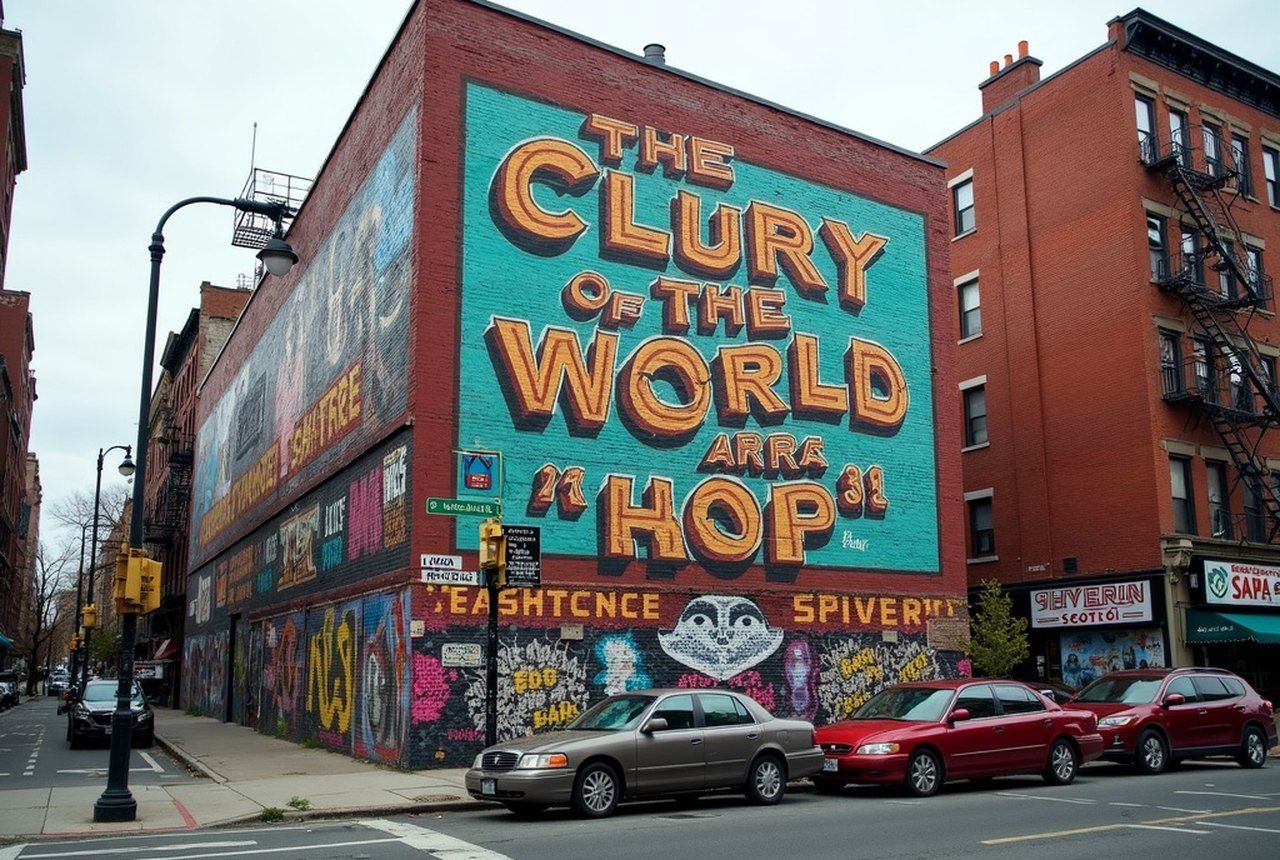
Hunts Point is one of those neighbourhoods where murals are embedded in daily life rather than installed for pedestrian tourism. The industrial grid around Hunts Point Avenue and the food-distribution market strip carries work that speaks directly to the community — environmental justice themes are common here, reflecting the area's long history of advocacy against pollution and inequitable land use. Several murals on and around Spofford Avenue and Tiffany Street have roots in community organizing, painted in collaboration with local residents and activist groups. This isn't the Wall of Fame aesthetic; it's public art with an argument. Look also for paste-up and sticker work filling gaps between the larger pieces — the neighbourhood's visual conversation runs at multiple scales.
03Fordham Road
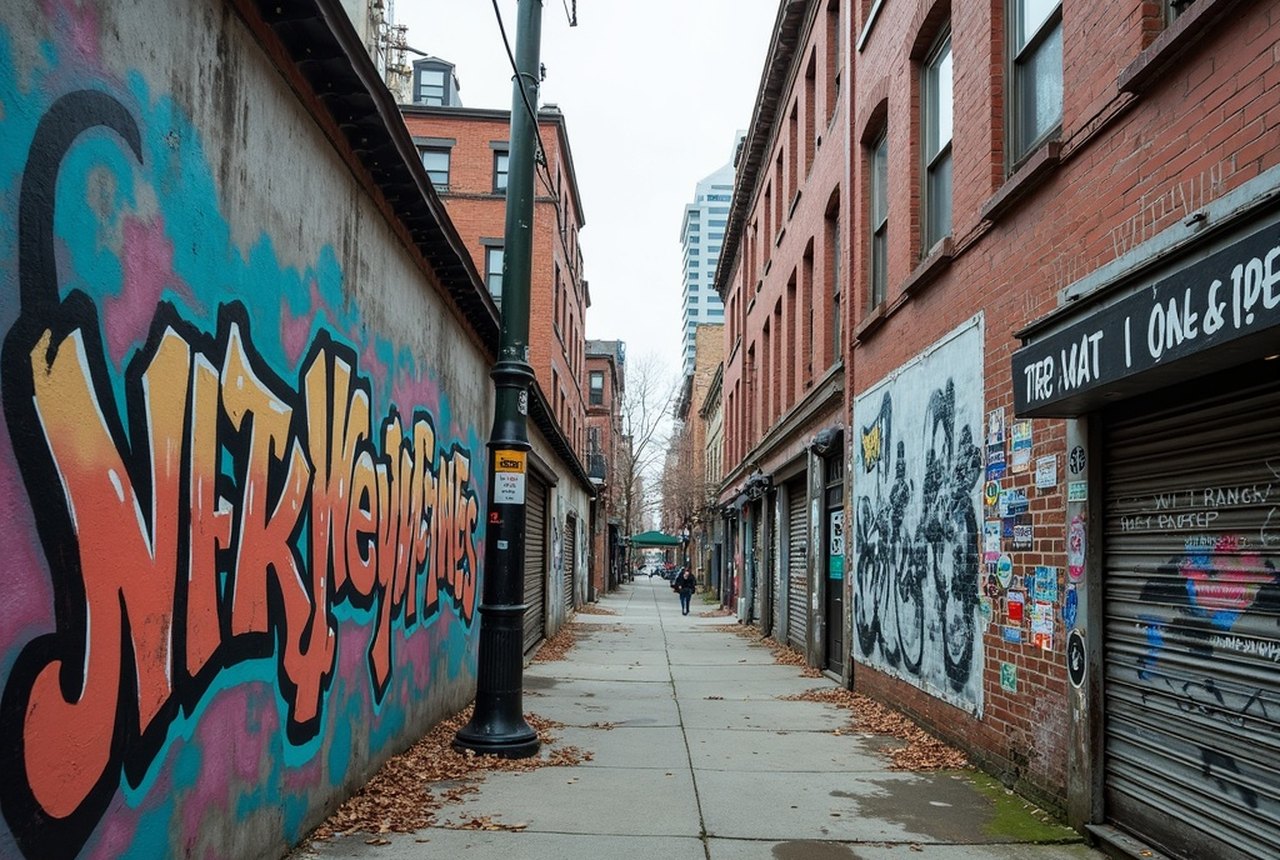
Fordham Road's commercial chaos is easy to dismiss if you're walking fast. Slow down. The storefronts and residential buildings flanking the road between the Grand Concourse and Webster Avenue carry murals that document Dominican, Puerto Rican, and West African cultural presence in the neighbourhood — flag imagery, portraiture, folklore figures. The walls around Fordham Plaza are worth a circuit. None of this is static; check back seasonally, because turnover is real and new work appears with community events and borough initiatives.
04The Grand Concourse
The Grand Concourse — that wide, Beaux-Arts-influenced boulevard running nearly five miles from the lower Bronx up through Bedford Park — has its own mural logic. The scale of the buildings invites scale in the art. Around 161st Street near Yankee Stadium, public murals cluster with baseball and borough-pride themes, but push north toward 167th, 170th, the area around Joyce Kilmer Park, and the imagery becomes more varied: tribute work, neighbourhood history, abstract panels. The Bronx Museum of the Arts sits at 165th and the Grand Concourse and occasionally activates the surrounding public space, though the street-level murals in this stretch exist independent of any institution.
05A Word on Navigation
The Bronx rewards systematic walking over app-guided hopping. Pick one corridor per visit — The Hub to Hunts Point is a solid two-hour circuit on foot — and pay attention to walls at ground level, above storefronts, and wrapping around corner buildings. Pieces that face away from the main road are often the most interesting.
Field note: The Hub to Hunts Point ≈ two hours on foot. One corridor per visit; eyes up at second-storey level — the big work lives above the storefronts.
The borough's mural culture isn't performing for tourists; it's speaking to the people who live here.
That's not a limitation — that's what makes it worth the trip.
TATS Cru
Crew · South Bronx · since the early '90s
Bronx-based mural crew — Bio, Nicer, Meres and their extended circle — producing some of the city's most technically accomplished large-format and memorial work, at home base and worldwide.